Builder · Engineer · Tinkerer

Thomas
Sarlandie

French in California. I build things — software, hardware, companies, and occasionally furniture. Pilot, sailor, photographer.

The product engineering trade-off

Cover video captured with my Meta Glasses and downloaded over WiFi Direct at the Yacht Club — Thank you Team!

Good engineering strives for simplicity. We remove building blocks until the system is as simple as can be. When we reach this stage, we call it elegant. It's hard to design but easier to debug and maintain. And yet, the products we love are full of hidden complexity.

Read more →

It was never ok to blame the computer for your failures — it is not ok to blame the agent either.

You are in charge.

Read more →

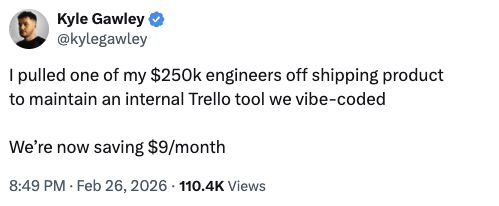
I have been wondering what future there is for vertical software once everyone can write their own custom solution to any problem.

So this made me feel better this morning ;)

Read more →

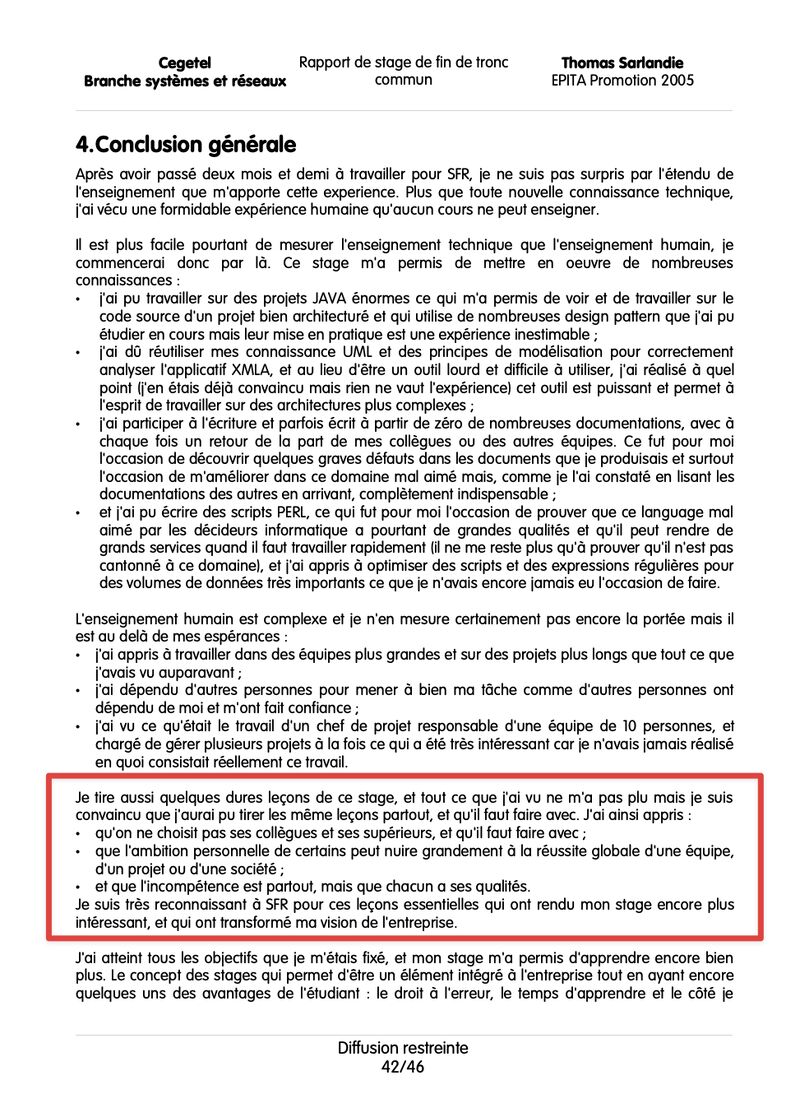
🇫🇷 En fouillant mes archives je tombe, page 42(!), sur cette pépite dans mon rapport de stage chez SFR en 2003 ... j'espère que je n'ai jamais perdu cette clarté d'esprit !

Et que les nouveaux se rassurent — personne ne lira jamais votre rapport de stage. Je ne me souviens pas que qui que ce soit m'en ait parlé après.

Read more →

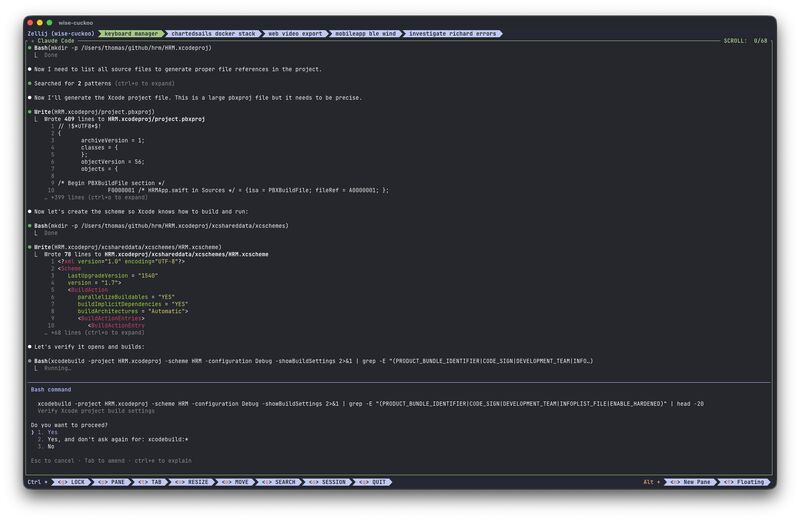
Claude Code tip of the day: Use a terminal where you can rename tabs. It helps me a lot to keep some sanity as I go throughout the day and start losing track of the five things I am doing in parallel.

I like Ghostty + Zellij for this — use Ctrl-T R in Zellij to rename a tab, and the name can be long. ❤️

Read more →

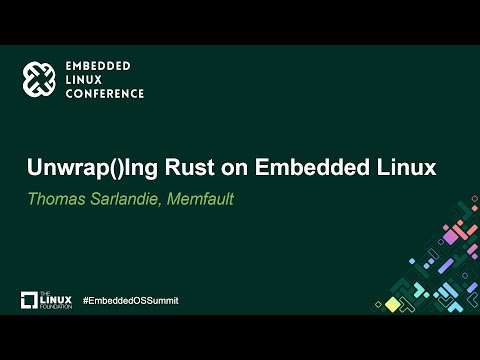
Unwrap()ing Rust on Embedded Linux — EOSS 2024

I gave a talk at the Embedded Open Source Summit (EOSS) 2024 about Memfault's transition from C to Rust on embedded Linux. Lessons learned from introducing Rust into a production embedded codebase — the wins, the pain points, and what we'd do differently.

Read more →

The Roadmap Sets the Tempo — Tech.Rocks Summit 2018

I spoke on the Master Stage at the Tech.Rocks Summit in Paris about how the roadmap synchronizes sprints and sets the tempo for engineering teams. The talk explored how product roadmaps can be used not just as planning tools but as coordination mechanisms across teams.

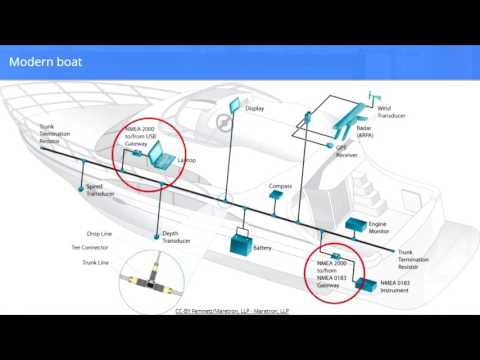
KBox: Open-Source Boat Electronics — HDDG #14

I presented KBox at Hardware Developers Didactic Galactic (HDDG) #14 in San Francisco. KBox is an open-source NMEA gateway for boats — it connects marine electronics (wind, speed, depth sensors) to WiFi-enabled devices like tablets and phones.

Read more →

Building KiCad from source on Mac OS X

I have known for a while now that I needed to learn KiCad. Most open-source projects are now using it (very simple ones to highly complex like the HackRF), it is supposedly quite stable, very capable and the community is growing quicker every week.

On a recent plane ride, I spent several hours watching the excellent KiCad series by Contextual Electronics, hosted by Chris Gammell who is co-host on the most excellent TheAmpHour podcast.

Read more →

KiCad OS X Binaries

Pre-compiled KiCad binaries for Mac OS X, built from source. Most people just want to download and use them — so here they are.

Click here to download KiCad revision 5247 (2014-10-31: Halloween edition!).

Read more →

Organizing Technical Teams — Talk in Dakar

A talk I gave in Dakar, Senegal about strategies for growing and organizing technical teams. Covered specialization vs. generalization, communication patterns as teams scale, and managing external resources effectively.

Use Vagrant To Install The Pebble Sdk In Minutes

Although my Orange Pebble has not arrived yet, I had to start digging around the SDK. As always the first step is to install it on your computer.

The official approach might seem a little complicated to some developers and is not available on Windows. In this post, I suggest using Vagrant to set-up a development virtual machine. You will be ready in a few minutes and it works on every platforms.

Read more →

4 Hour Training To Git And Github

I am publishing today The Four Hour to Git and GitHub Training. Is is available under the CC-BY-SA license to anyone who would like to organize a Git/GitHub training at work/school/user-group/etc.

Developers training on GIT @cticdakar par Thomas Sarlandie (@sarfata). With @peopleinput @seysoo @samaevent @afriqueitnews @esmt & others! — Yann Le Beux (@YannLeBeux)

Read more →

First Steps In 3D Printing With Foldarap

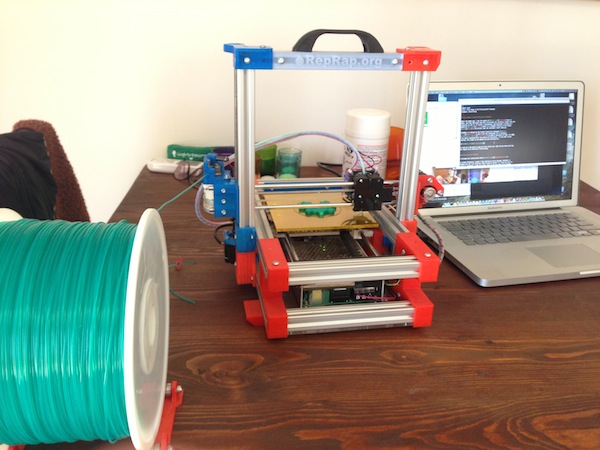
About two weeks ago, I met the people of Jokko Labs here in Dakar, and they mentioned they had a 3D printer but currently lacked time and resources to use it. Of course I volunteered, and yesterday I picked up a beautiful FoldaRap which is a foldable version of the famous RepRap: a 3D printer than can reproduce itself (mostly).

FoldaRap is a design by the french (cocorico!) designer Emmanuel Gilloz and if you are interested, he is running a crowdfunding campaign to make a new batch of them. This printer can be folded for easy transport and is really compact. It can still print objects as big as 140x140x140mm.

Read more →

Back to basics: Agile Practices

I am pursuing my work with the Senegalese startup scene through CETIC. After my first presentation on resources planning, we met today to speak of basic agile practices.

A few companies in the room (Intek and Seysoo) have been implementing Scrum for a few months now so after my slides we had a great in-depth look at the tools they use to implement Scrum (Icescrum, Balsamiq and DokuWiki mainly).

Read more →

Back to basics: Resource planning

I have started working with startups in Senegal, sharing some of what I have learnt in my 6 years as CTO of Backelite. This is the first set of slide I am making public: on resource planning.

Resource planning is very important for small service companies: you have lots of projects, with priorities that change every week and you need to find ways to deliver in time, make sure everyone is always busy and also try to do everything in normal hours.

Read more →

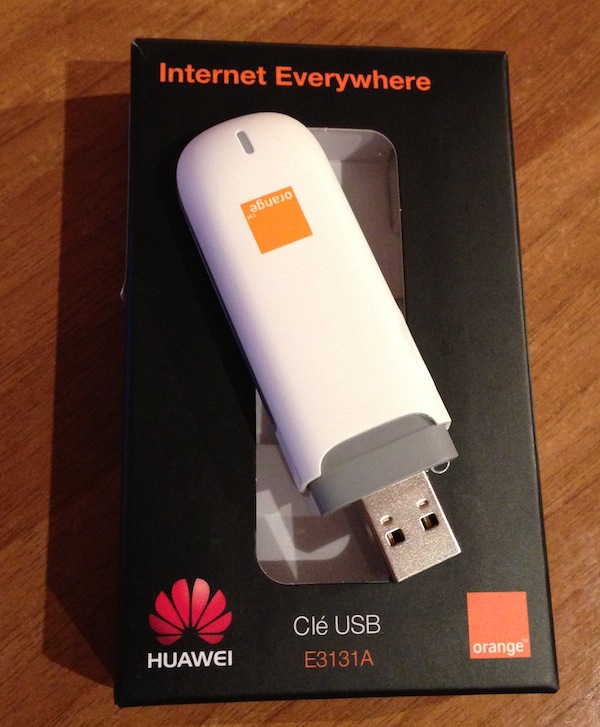
Fun with Huawei E3131A USB 3G modem - Mac setup

As some of you know, I am spending a bit of time (six months) in Senegal. Last week, Orange Senegal ran a promotion: their 3G Internet usb key was available for 10000 FCFA (~15€/$20), including one week of unlimited data access. I already have Internet access through my phone but I thought this would be a fun new toy, especially if I could get it working on the Raspberry Pi as well.

Huawei is one of those huge chinese companies who are changing the face of Telcom but we almost never hear about them. They provide everything from software to run a mobile network to cheap phones and 3g devices.

Read more →

Intervention au Mali et intérêts français - Un point de vue local

Although I have decided to blog mostly in English, I am writing this post about the french intervention in Mali in french to share my two cents with fellow french people.

Depuis une semaine et l'annonce d'une intervention armée de la France au Mali j'entend plusieurs voix se lever et dénoncer une guerre qui ne serait justifiée que par les intérêts nucléaires français.

Read more →

How to secure your Mac when using it on wireless networks

I recently attended the Defcon conference which is well know to be the most hostile network in the world. One common advice is to hide all your devices.

Of course, you know I could not spend a week without the Internet, so I finally looked into securing my computer which I should have done a long time ago. In this post, I want to share some recommandations on how to really secure your mac computer and protect your privacy when surfing online.

Read more →

Setup your very own VPN server with Amazon EC2

Setting up a VPN server with Amazon EC2 is a great way to protect your privacy. You can turn the server on when you need it, shut it down when you dont. All your traffic will go through your VPN and go out on the internet from your EC2 box so that you are in a really secure environment.

Amazon lets you use a free instance for a year that will be perfect for our purpose. And with the help of this post, it should not take more that 5 minutes!

Read more →

CTO 101: Source code management

About CTO101 ------------

CTO101 is a series of guidelines for entrepreneurs who have great ideas but have not found yet the CTO that will help their company grow. It is all about giving you the tools you need to work effectively with freelance developers, hosters and 3rd party tools.

Read more →

Growing ideas

Trees, houses and bushes were passing by as our tuk-tuk pulled by a small motorcycle rushed down the unpaved street of Cambodia. I had only been gone for a few weeks but already my mind was rushing to find a new project to work on. This is when it happened.

How the idea came up is probably not that important. It was probably something that had been running unnoticed in my mind. The peace of the moment gave it an opportunity to materialize in my head. What does matter is: How could I find out whether this was the idea?

Read more →

Working in small batch: starting a website

I tend to have tons of great ideas of stuff to do, but quite sadly most of them just end up in a huge mental stack that never seems to go down. The more ideas I have, the more frustrated I get that nothing actually gets done. The luckiest ones get my attention for a few days, but no matter how much time I spend, they never leave the state of great ideas that I just did not finish.

Those symptoms are not unlike the problems that a lot of companies face: they spend a lot of time working on new features, on a new process that will revolutionize how work is done but often nothing gets out of that work: no code is rolled in production or the slides end up in the trash of an executive that will never have time to approve them. When dealing with products, agile practices encourage small iterations and frequent releases. In a company, lean practices recommend working in very small batch that follow a complete design-develop-test cycle. It occured to me recently, that those principles could very well be applied to my own personal projects: building this website for example.
Read more →

Bowling for Columbine — quelques réflexions

Allez voir Bowling for Columbine, un excellent film de Michael Moore. C'est un documentaire qui aide à comprendre la violence aux États Unis. Loin de l'anti-américanisme primaire, ce documentaire présente une véritable réflexion, appuyée par des interviews et des chiffres.

Lire mes réflexions →

Have fun with g++ — discovering NRVO

I discovered that g++ 3.1 elides copy constructors when returning objects from functions. I wrote a small test program to prove it — the copy constructor simply never gets called. Today we call this Named Return Value Optimization (NRVO), and it's part of the C++ standard. Back then it felt like compiler magic.

Read the original page →

Isabelle Achour

Isabelle Achour est morte le 4 août 1994 à Niš en Serbie. Parce que le documentaire de son amie journaliste Martine Laroche Joubert m'a marqué et qu'une recherche rapide sur Internet ne renvoie aucun site parlant d'elle ; j'archive ici le résumé du documentaire tel qu'il est apparu sur le site de la chaîne Planète.

Lire →

UserFriendly — September 12, 2001

The day after September 11, UserFriendly — the daily comic strip about life at a small ISP that we all read back then — published this strip. No jokes, no punchline. Just silence.

I kept it on the front page of sarfata.org for a long time.

Linux on a Sony Vaio PCG-SR1K

I bought a Sony Vaio SR1K with my own money — my first year at EPITA — and spent the summer getting Debian to run on it. Sound, modem, PCMCIA, suspend — everything needed patching or coaxing.

I wrote it all up as a howto that got linked from linux-laptop.net. The same day, I was asking Usenet for help — my earliest trace online.

Read more →

My first website goes online

My first website went online on Mygale), a legendary French free hosting service. I was 14, writing about Delphi, Visual Basic, Games Workshop, and planning a software company with friends called "Trisoftware."

Made with Hot Dog Pro. Featured 20 banner ads to support the host.

Read more →